
Case Study
Commerce Park: Engineering Measurable Community Value Into a Live RFP
Case Study — Social Impact Investment Programme
Commerce Park: Engineering Measurable Community Value Into a Live RFP
Location
St. Petersburg, FL
Sector
Hospitality & Workforce Housing
Edenwell Role
SIIP Design & Capital Structuring
Status
RFP Submitted, May 2026
Setting the stage
$10B+
100,000
38%
11%
The Corridor
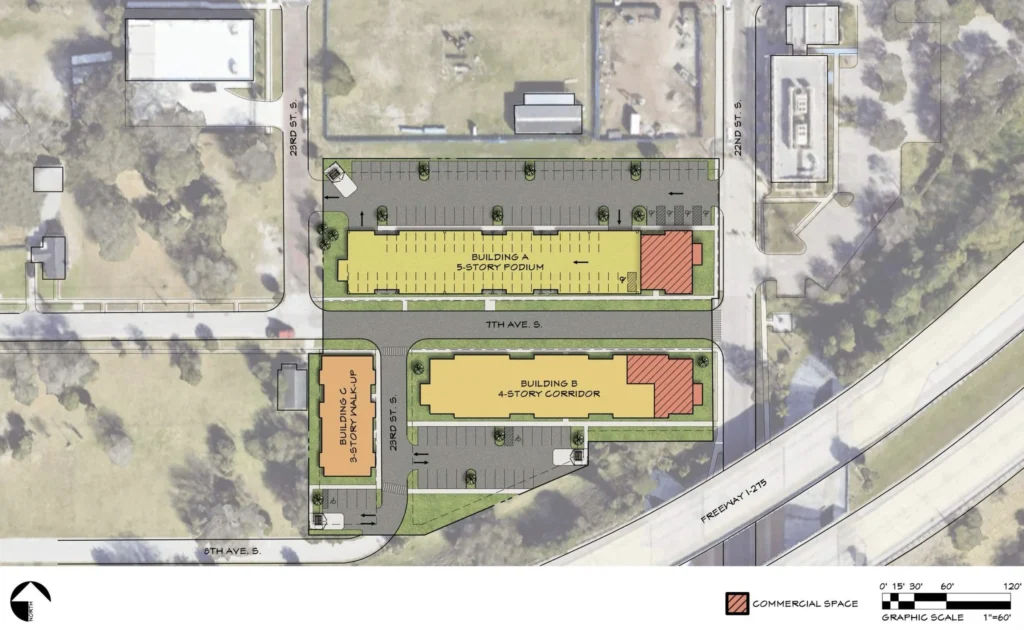
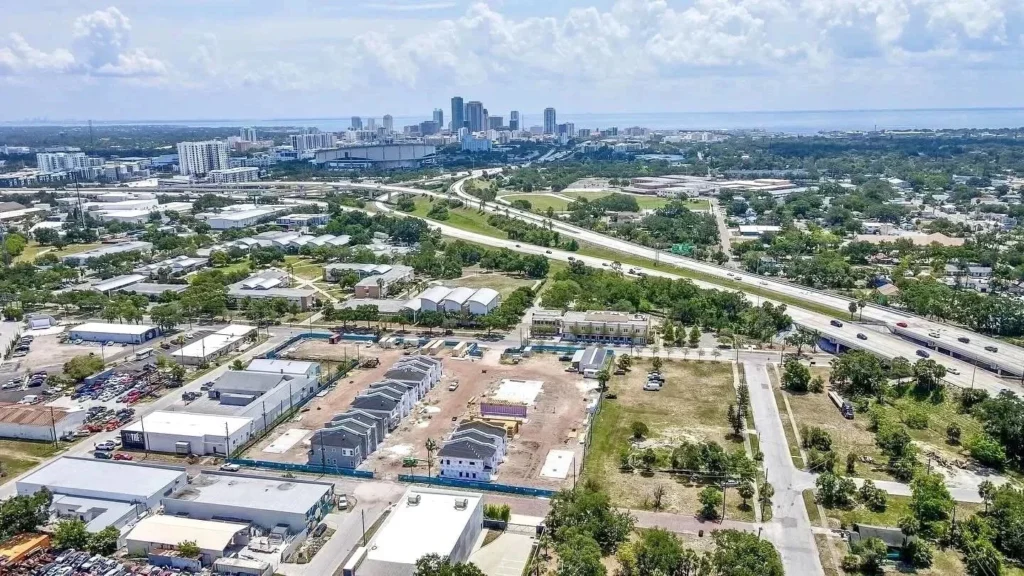
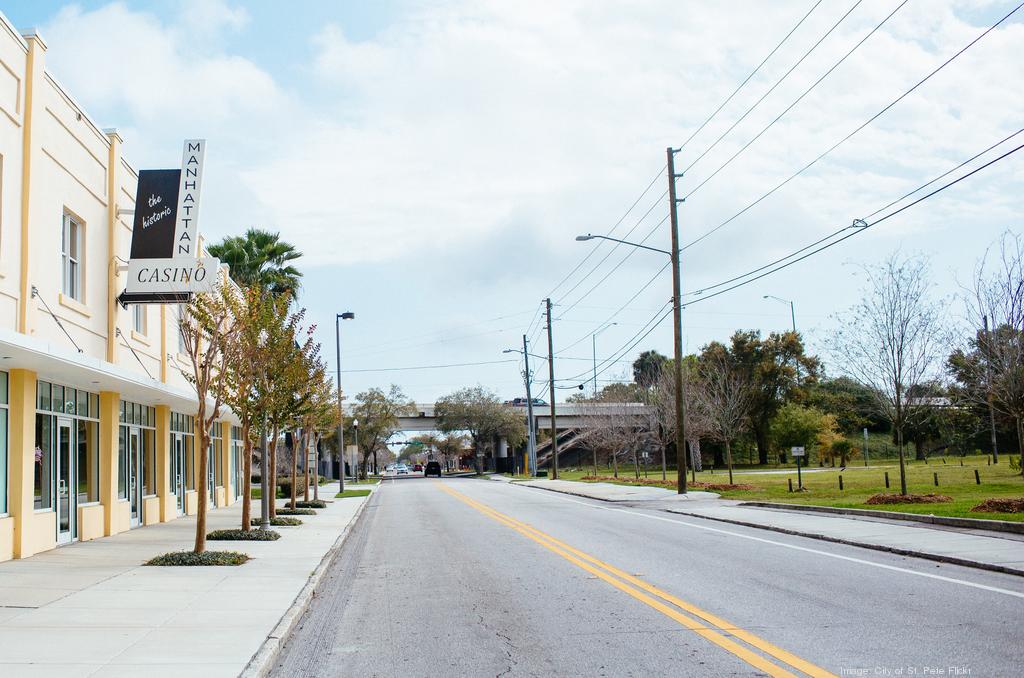
Commerce Park sits on 22nd Street South in The Deuces — once home to more than 100 Black-owned businesses and, at the Historic Manhattan Casino, a stage for Duke Ellington, Ella Fitzgerald, and Billie Holiday during segregation. The construction of Interstate 275 physically severed that ecosystem. City CRA data shows an 11% decline in renter-occupied units between 2012 and 2023 — displacement as a present, measurable reality, not a historical footnote.
A development consortium — led by Zarius Property Developments, White Keys Real Estate Partners, and Homage Hospitality — proposed a 160-key boutique hotel, roughly 90 units of workforce co-living housing, and 8,000 sq ft of community retail for the site. Edenwell was brought in to design the social infrastructure that would determine whether that development strengthens the corridor or simply sits on top of it.
The Brief: Impact That Shows Up on the Balance Sheet
Community, Culture & Commerce
Faith, Family & Education
Resilience & Renaissance
Five Impact Programmes, Five Financial Cases
Deuces Hospitality Apprenticeship Pipeline
Year 1 Budget
$95,000
Paid apprenticeships and priority hotel hiring for co-living residents. Targets an 80-resident Year 1 cohort rising to 150+ by Year 3; projected to save $60,000+/yr in recruitment fees and $117,280/yr in reduced turnover cost at Year 3 stabilization.
Community Wealth Builder Fund
Year 1 Budget
Embedded in procurement
Minority-contractor spend targets and CRA-scoring strategy designed to attract mission-aligned lenders and reduce financing cost, paired with local-hire maintenance staffing to lower long-run operating expense.
Sankofa Heritage Suite & Cultural Residency
Year 1 Budget
$75,000
4–6 curated Heritage Suites and a quarterly artist residency, developed with the Woodson Museum and Deuces Live. Modeled at $108,000/yr in direct room-revenue uplift, plus an estimated $150,000–$300,000 in first-year earned media.
Workforce Housing Flourishing Index
Year 1 Budget
$25,000
A five-dimension resident wellbeing index (Stability, Belonging, Economic Mobility, Wellbeing, Civic Power), measured quarterly and independently verified by USF St. Petersburg every three years — built to satisfy OZ, LIHTC, CRA, and institutional LP ESG reporting simultaneously.
Culinary Heritage Kitchen & Micro-Farm
Year 1 Budget
Embedded in F&B capex
A rooftop micro-farm and commercial kitchen built with the St. Pete Youth Farm, connecting the hotel’s F&B programme to the federally designated Gullah-Geechee Cultural Heritage Corridor. Projected to cut fresh-produce costs by $15,000–$25,000/yr at scale.
Jenniffer Gearheart-Tang
Chief Innovation & Impact Officer, Edenwell
Governance Built to Survive Scrutiny
- Every KPI is written into the proposed Community Benefit Agreement with the City of St. Petersburg CRA
- Reported annually by Edenwell Global Impact Group in a public Impact Report, independent of the developer’s own financial reporting
- Third-party verification from USF St. Petersburg on a fixed three-year cycle
Beyond the Hotel: Financing the Whole Stack
Josef Reisz
CEO & Partner, Edenwell Capital Partners
Status July 2026
The Commerce Park proposal was submitted to the City of St. Petersburg’s Economic & Workforce Development Department in May 2026. Shortlisting is pending, and this case study describes the SIIP as designed and proposed — not as an awarded or operating project. Edenwell is publishing it because the design discipline behind the SIIP — costed programmes, published KPIs, independent verification — is repeatable on day one of any Living-sector asset, regardless of where any single deal lands.
Take a SiiP
Edenwell designs and operates Social Impact Programmes for student housing, workforce and affordable housing, co-living, and active and later living assets across the UK, Luxembourg, Europe, and the United States. If you are underwriting a Living-sector asset and want social impact that shows up in NOI, occupancy, and lending terms — not just a reporting exercise — talk to us.